


Welcome to Sports Politika, a media venture founded by investigative journalist and researcher Karim Zidan that strives to help you understand how sports and politics shape the world around us. My mission is to offer an independent platform for accessible journalism that raises awareness and empowers understanding.
If you share this vision, please consider supporting my work by joining becoming a paid subscriber.
On a snowy December morning in Washington , DC., the global football community descended on the John F. Kennedy Center for the Performing Arts—America’s cultural centre—to attend the 2026 FIFA World Cup draw.
While the stated purpose of the event is to outline the groupings for the teams participating in the 2026 men’s World Cup, set to be held in the U.S., Canada, and Mexico, it was also a glitzy showcase like only America could produce. FIFA has booked a series of entertainers, including Andrea Bocelli, the Village People, Kevin Hart and “draw assistants” like Tom Brady, Shaquille O’Neal, Wayne Gretzky, and Aaron Judge, adding a layer of showmanship that made the event feel closer to an awards ceremony than a procedural draw.
Yet beyond the medley of musical interludes, choreographed segments, and polished stagecraft, one particular moment stood out above the rest: the moment when FIFA President Gianni Infantino announced U.S. President Donald Trump as the winner of the inaugural FIFA Peace Prize.
It was a strange decision on FIFA’s part. The organization’s own code of ethics demand a “duty of neutrality,” which means that FIFA officials were required to remain politically neutral when dealing with governmental institutions.” By offering a newly-created peace prize to the president of one of the host nations of the upcoming world cup, critics argued that FIFA had violated its own statutes, as well as its credibility.
FIFA framed the award as being given on behalf of more than five billion football fans worldwide, a sweeping claim meant to underscore the game’s unmatched audience and influence. Yet even as the applause echoed and the ceremony moved forward, a quieter question lingered in the background: by what process had this choice been made? No shortlist had been shared, no criteria beyond the broad mission statement had been detailed, and no voting mechanism had been explained.
Under Infantino, FIFA has become more centralized, its decision-making increasingly opaque and concentrated at the top. The FIFA Peace Prize, unveiled and awarded without any clear process, felt less like a global honour and more like a unilateral decree—an example of how power inside the organization is now exercised.
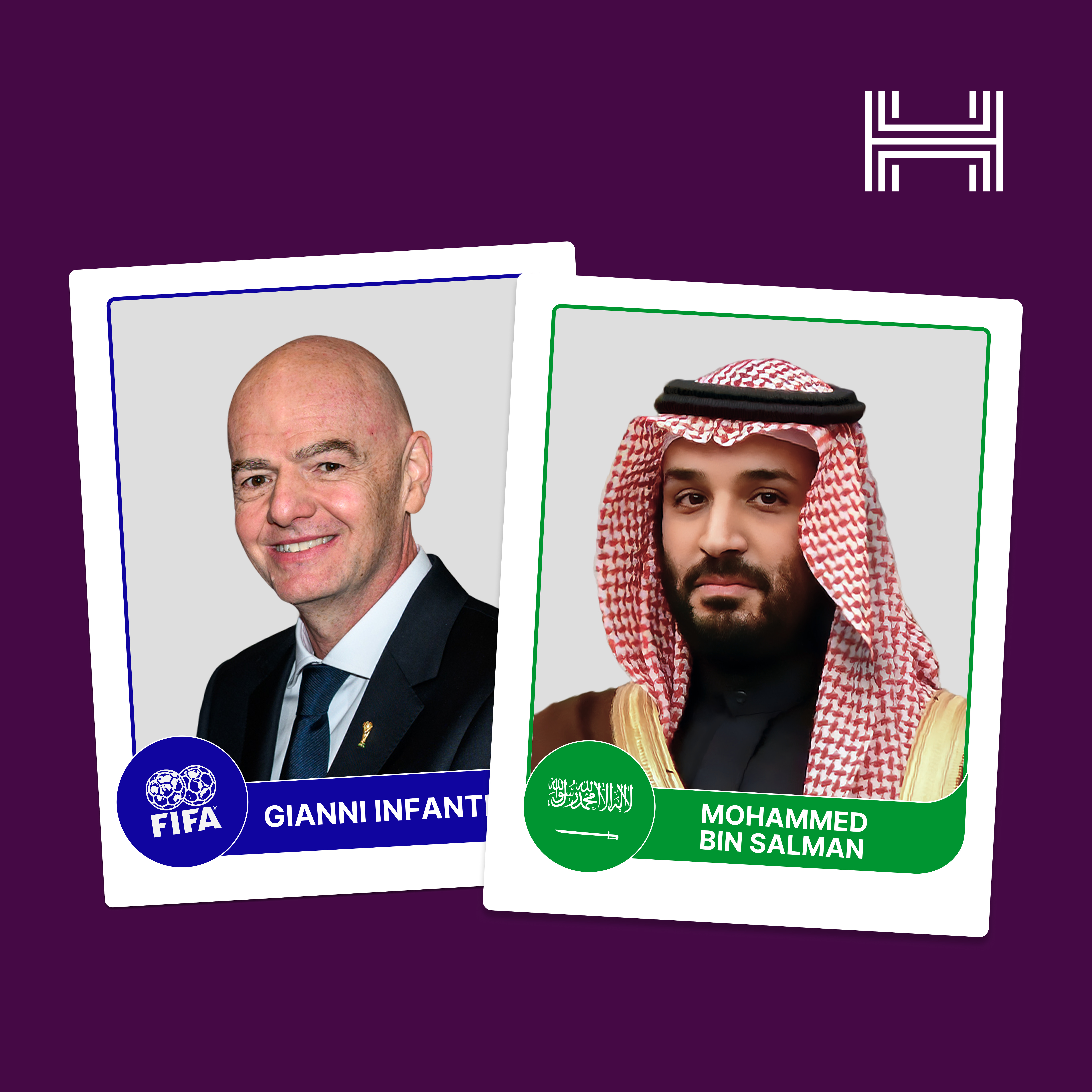
That approach is not happening in isolation. It aligns with the trajectory of the tournaments themselves. The 2030 World Cup will stretch across multiple locations, including Morocco, while 2034 is set for Saudi Arabia—hosts where image, authority, and centralized control are deeply embedded in how major events are staged.
So what can we do about it?
Listen to Ep. 5 of Power Plays to find out.
Episode 1: The Fascist World Cup

The first episode of Power Plays traces how Benito Mussolini transformed the 1934 World Cup into a global showcase for fascist power.
Ep. 2: Pelé, the Dirty Wars, and the Monster in the Streets

In the first episode of Power Plays, we explained how the 1934 World Cup became a fascist spectacle. Episode 2 travels to the 1970s, when FIFA navigated relation with dictators & military juntas.
Ep. 3: Pussy Riot and Putin’s World Cup

Vladimir Putin seized the 2018 World Cup as a chance to reintroduce Russia on the global stage. Pussy Riot, an infamous Russian feminist protest art group, had other plans. Listen to Ep 3 now.
Ep. 4: The Story of Qatar's World Cup Whistleblower

After refusing to help cover up migrant worker abuses as Qatar's World Cup media manager, Abdullah Ibhais was imprisoned—and forced to watch the tournament from behind bars. This is his story.
Sports Politika is a media platform dedicated to the intersection of sports, power and politics. If you like what you see, upgrade to a paid subscription (or gift a subscription if you already have your own). We would appreciate if you could also like the post and let us know what you think in the comment section below.


