

The Album of the Disappeared
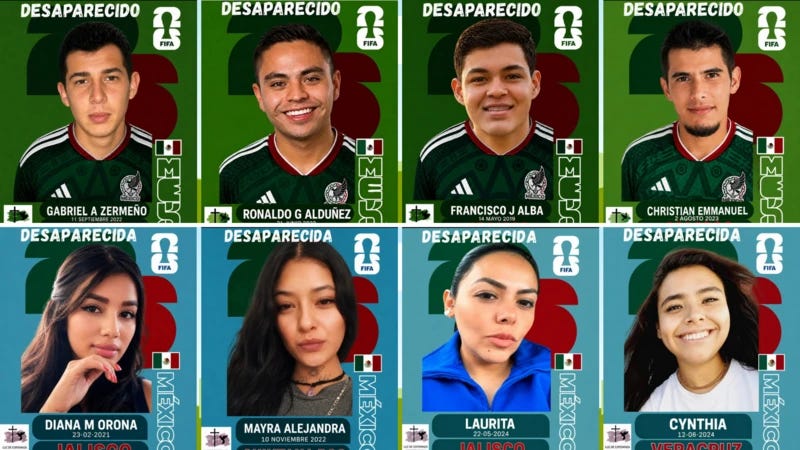
Ahead of the World Cup, Mexicans are creating Panini-style stickers to keep their forcibly disappeared loved ones in the public eye.

Welcome to Sports Politika, a media venture founded by investigative journalist and researcher Karim Zidan that strives to help you understand how sports and politics shape the world around us. My mission is to offer an independent platform for accessible journalism that raises awareness and empowers understanding.
If you share this vision, please consider supporting my work by joining becoming a paid subscriber.
As a kid growing up in the Middle East, the World Cup was a magical time.
Every four years, the tournament transformed Cairo’s streets into month-long gathering places for millions of fans. Old rivalries were resurrected and new friendships were formed over late-night matches at crowded shisha cafes and sporting clubs.
One of the rituals I remember vividly during those days was collecting and trading Panini stickers to complete my World Cup album. It was an obsession that started in 2002, when Egypt had a supermarket promotion with La Vache Qui Rit (The Laughing Cow), whereby you could find a batch of the sought-after football cards in each circular container of spreadable cheese. The promotion worked; I nagged my mother to buy dozens of La Vache Qui Rit containers so I could complete the album, which I still have to this day.
While Panini stickers have historically carried the hopes and faces of football stars, in Mexico, activists are using the same format to shine a spotlight on their loved ones who have been forcibly disappeared.
Mexico, which will co-host the 2026 edition of the FIFA World Cup alongside Canada and the United States, is in the midst of a longstanding crisis. The country’s National Registry recorded 134,460 missing persons, many of whom were forcibly recruited into drug cartels or were brutally murdered for resisting their fate. That figure is enough to fill the Azteca Stadium in Mexico City, which has a capacity of 83,000 people, one and a half times over.
The surge in disappearances over the past decade reflects the growing influence of organized crime across Mexico. Large areas of the country now fall under near-total control of the cartels, which often grow their ranks through forced recruitment. In order to avoid attracting the attention of the authorities, cartels dispose of corpses burying them in unmarked graves, incinerating them, or dissolving them in vats of acid.
Keep reading with a 7-day free trial
Subscribe to Sports Politika to keep reading this post and get 7 days of free access to the full post archives.