

The World Cup View From Gaza
While watching the World Cup, do not look past this view from Gaza, writes Khaled Beydoun, author of American Islamophobia: Understanding the Roots and Rise of Fear.

Welcome to Sports Politika, a media venture founded by award-winning investigative journalist Karim Zidan that strives to help you understand how sports and politics shape the world around us. My mission is to offer an independent platform for accessible journalism that raises awareness and empowers understanding.
If you share this vision, please consider supporting my work by joining becoming a paid subscriber or by pre-ordering my new book, THE ULTIMATE STRONGMEN.
The beautiful game is supposed to transcend politics. Football’s governing institutions routinely celebrate the sport as a universal language capable of uniting people across borders, religions and ideologies. This is especially true of football’s signature tournament and spectacle, the World Cup - which is currently unfolding across North America. Yet in Gaza, a hemisphere and wold away, football has become another ledger of loss that looms in the shadow of the World Cup.
Among the tens of thousands of Palestinians killed during the war are hundreds of footballers whose lives embodied the aspirations of a besieged people. Their deaths have not merely thinned rosters or interrupted seasons. They have erased dreams, dismantled institutions and severed a vital source of hope for a generation growing up amid siege, ethnic cleansing, and for more than two years, genocide.
One of those players was Suleiman al-Obeid, a former Palestinian national team star often described as the “Palestinian Pele.” During a distinguished career, he scored more than 100 goals and became one of the most celebrated footballers in Palestinian history. His death reverberated far beyond Gaza because al-Obeid represented something larger than sport: the possibility that talent and determination could break through suffocating political barriers.
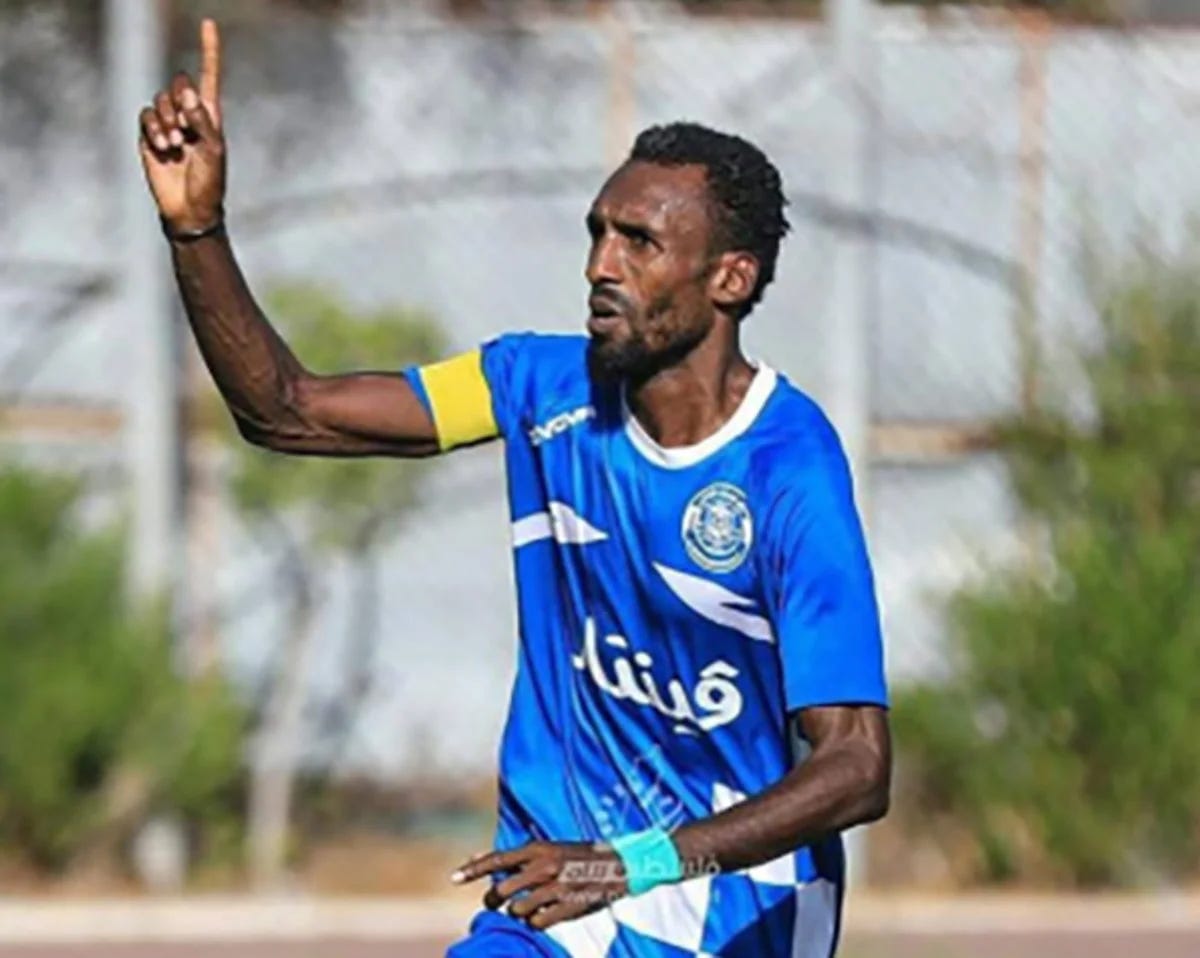
The Palestinian Pele was not alone. Muhannad al-Lili, a standout player in Gaza’s Premier League, died from injuries sustained during an airstrike. Mohammed Barakat, known as the “Legend of Khan Younis,” was among Palestine’s most accomplished footballers. Ahmad Abu al-Atta, a defender for Al-Ahly Gaza, was killed alongside members of his family. Hani al-Masdar, the coach of Palestine’s Olympic team and a revered figure in the evolution of Palestinian football, was also killed.
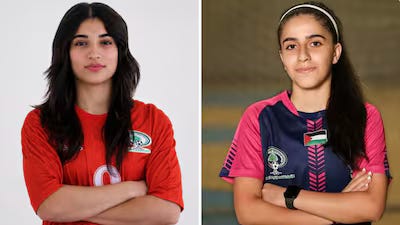
Others have been kidnapped, most notably, Rand Al Halawani, 20, and Natalie Abu Dayyeh, 21, both Palestinian international footballers. Their detention has prompted calls for FIFA, which stages the World Cup, to act on their behalf. (Editor note: AL Halawani was released a few days later, though Abu Dayyeh remains in detention)
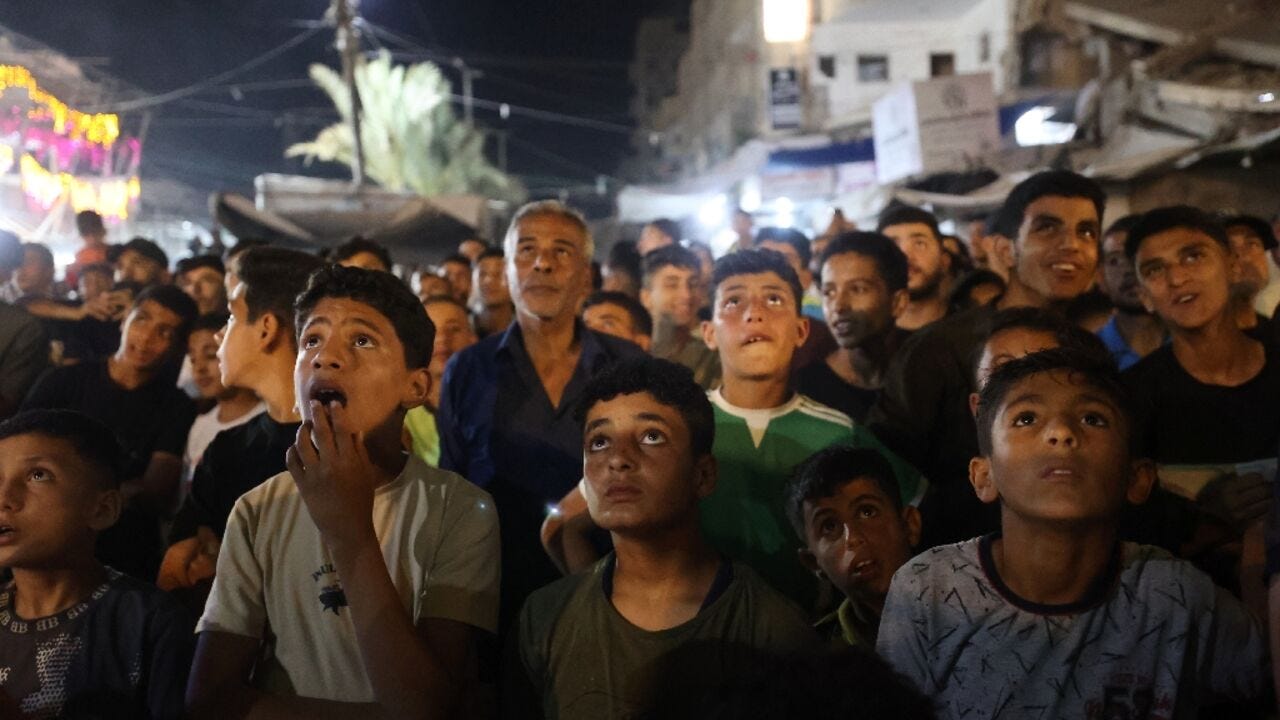
The shadows of these Palestinian footballers (departed and presented), in the imagination of football fans in Gaza, dribble alongside Lionel Messi, Cristino Ronaldo, Mohamed Salah, and other football stars competing in the World Cup. Even more, their jerseys are ubiquitous across Gaza, worn by children bloodied by airstrikes and slain along its beaches.
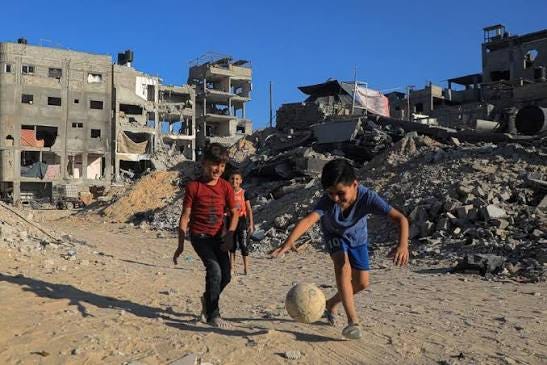
Furthermore, the names of these late Palestinian players matter because statistics alone can obscure the human cost of war. Yet the statistics themselves are staggering. The Palestinian Football Association reported that more than 400 Palestinian football players have been killed since October 2023. More than 1,000 members of Gaza’s broader sporting community—including coaches, referees, administrators and club officials—have lost their lives. Stadiums that once hosted league matches now stand damaged or destroyed. Training grounds have become rubble. Young legs that once kicked round balls have been amputated.
The destruction of football in Gaza mirrors the destruction of Gaza itself. Sport is often dismissed as a luxury, something secondary to questions of survival. But for communities living under extraordinary pressure, football serves functions far beyond entertainment. It provides routine amid chaos, collective identity amid fragmentation and ambition amid scarcity, and most importantly, an escape from the horrors of war and genocide. In Gaza, there is no escape, and the slain footballers, decimated fields and deferred dreams testify to that.
The devastation cannot be quantified. For many young Palestinians, football represented one of the few remaining pathways to opportunity. Local clubs offered structure, mentorship and the possibility of competing beyond Gaza’s borders. On dusty pitches and crowded fields, children imagined futures larger than the constraints surrounding them.
Today, many of those futures have been buried beneath the ruins of neighborhoods, schools and sports facilities.
The global football community frequently invokes the language of solidarity. FIFA and continental federations celebrate football’s ability to affirm human dignity and bring people together. Those ideals demand consistency. The deaths of Palestinian footballers deserve recognition not because they were athletes, but because they were human beings whose lives held the same value as players anywhere else in the world.
These two had dreams of competing on the World Cup stage, and representing the aspiration of a people on a more level playing field than the political one imposed upon them.
Every footballer killed in Gaza leaves behind more than an empty position on a team sheet. Each leaves behind a story unfinished, a family grieving and a future denied. Their absence is a reminder that when war destroys a sporting culture, it destroys far more than a game.
While watching the World Cup, do not look past this view from Gaza.
This post was first published in Khaled' Beydoun’s Counterstory Substack.
Sports Politika is a media platform dedicated to the intersection of sports, power and politics. If you like what you see, upgrade to a paid subscription (or gift a subscription if you already have your own). We would appreciate if you could also like the post and let us know what you think in the comment section below.
 | A guest post by
|