

Inside Dana White and TKO’s Lobbying Effort to Reshape Boxing
Ari Emanuel, Dana White, and their allies are cashing in their lobbying chips as they seek to gain support for the Muhammad Ali American Boxing Revival Act, which would fundamentally reshape boxing.

Welcome to Sports Politika, a media venture founded by investigative journalist and researcher Karim Zidan that strives to help you understand how sports and politics shape the world around us. My mission is to offer an independent platform for accessible journalism that raises awareness and empowers understanding.
If you share this vision, please consider supporting my work by becoming a paid subscriber.
“Boxing as we know it is over.”
Those were the words of Luke Thomas during a livestream in early December 2025. Thomas, one of combat sports’ most prominent figures, had gone live shortly after attending the House Subcommittee on Workforce Protections hearing on H.R.4624, also known as the Muhammad Ali American Boxing Revival Act (MAABRA).
It’s now almost two months later and the bill has passed the Education and Workforce Committee by 30 votes to 4, moving to the floor, albeit with some amendments. At this point, it looks as though nothing can derail the act from becoming law. The house floor vote is likely to be merely procedural, almost guaranteed to pass.
The primary purpose of the MAABRA is to allow for the creation of Unified Boxing Organizations (UBOs). If passed, boxers will be able to choose to fight under a UBO’s system rather than solely under traditional sanctioning bodies (like WBA, WBC, IBF, WBO). These UBOs can manage their own rankings and championships, similar to how the Ultimate Fighting Championship (UFC) operates.
While the bill is framed by those lobbying for it as expansion, TKO would be uniquely positioned to dominate given its power in the world of combat sports.
UBOs would effectively set their own title systems, contracts, rankings and matchups, TKO could effectively corner the market for elite boxing by virtually bypassing some of the protections afforded to boxers under the original Ali Act. Nonetheless, the Revival Act allows for UBO’s to coexist alongside existing regulatory bodies.
UFC CEO Dana White has been keen to point out that there is nothing in the bill to stop boxers and promoters operating under the rules currently in place. Additionally, the bill has drawn some praise, even from its critics, for certain protection measures it introduces. After amendments made in the Committee stage, a $200 minimum per-round payment to boxers is included in the bill. Additionally, boxers under a UBO contract will be allowed to talk to other UBOs upon entering the final month of their contract. Increased health-insurance coverage for fight related injuries (minimum $50,000) is also included.
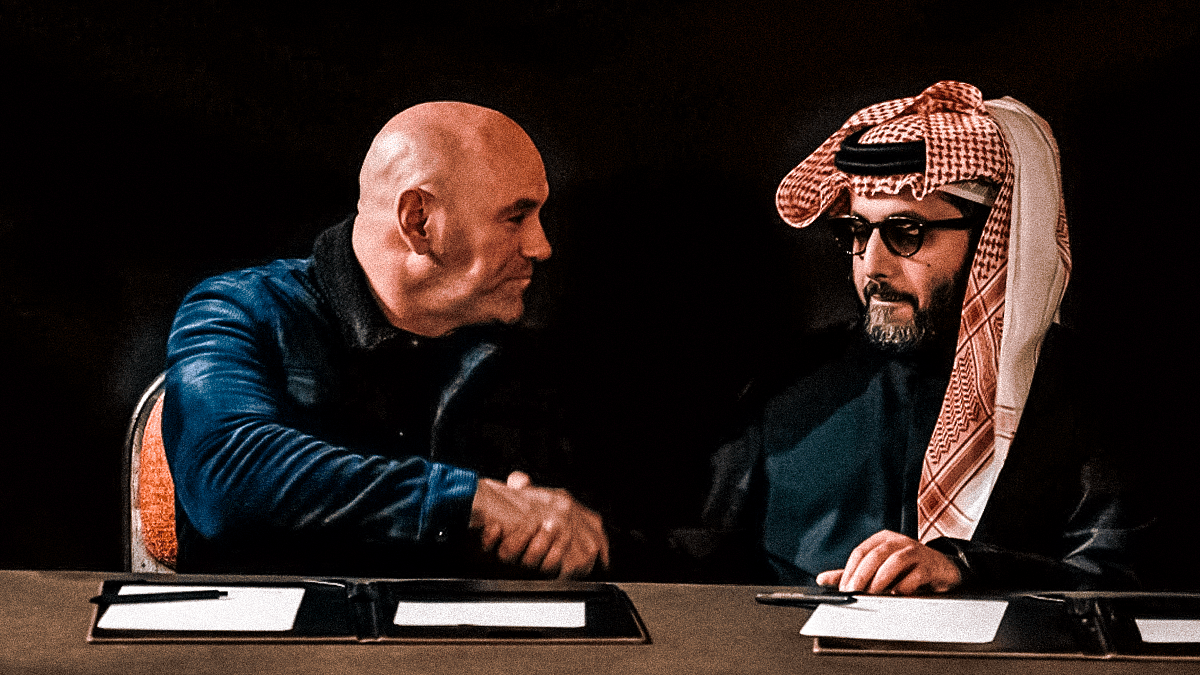
Before delving any further, it is worth trying to get our head around the relationship between the various companies and subsidiaries discussed in this article. At the top sits Silver Lake. Below it is Endeavor, which controls TKO Group Holdings, the parent company of the UFC and World Wrestling Entertainment (WWE). Ari Emanuel is a Hollywood super-agent who is now the CEO of both Endeavour and TKO. Finally, Zuffa is historically the UFC’s operating entity whilst Zuffa Boxing is a joint venture between Sela (a company owned by Saudi Arabia’s Public Investment Fund) and TKO. Ultimately, all of these parties stand to benefit more than anyone else from the signing of MAABRA into law.
TKO has conducted a carefully coordinated public campaign, involving the likes of Muhammad Ali’s widow, in support of the reform. However, campaign finance and lobbying disclosures reveal that money, access, and relationships which have been cultivated over many years may be what actually leads to the bill’s eventual passing. Political spending linked to Emanuel, White, Zuffa, and TKO predates MAABRA by a considerable margin, while personal and institutional connections are also likely to help push the act through.
These connections reach all the way to the very top of politics.
The President
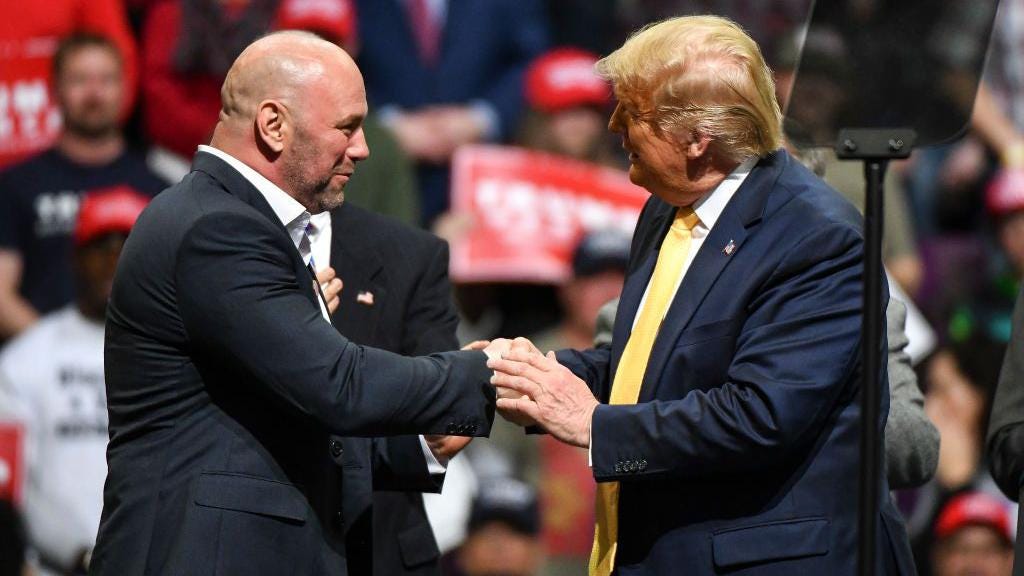
Dana White’s relationship with the 45th and 47th President of the United States needs no introduction. As the myth propagated by the UFC goes, White was in dire need of a home for UFC’s events in the early 2000’s, a time when the sport of MMA was recovering from a crusade led by Republican senator John McCain to destroy the organization. White found an ally in businessman Donald Trump, a well-known fight fan who had briefly promoted boxing events headlined by the likes of Mike Tyson in the late 1980’s and early 1990’s. Trump agreed to a trio of events at the Trump Taj Mahal in Atlantic City, New Jersey, including the first two events under the Zuffa banner. White has stayed loyal since, personally donating millions to Trump affiliated PAC’s and Super PAC’s over the years. He even spoke at the Republican National Convention in 2016. In his speech, White said “Donald was the first guy to recognize the potential that we saw in the UFC, and encouraged us to build our business”.
Though it is Trump’s relationship with White that receives the most publicity, what often gets overlooked in the UFC-Trump relationship is the fact that it is Endeavour CEO Ari Emmanuel who is the main player behind the scenes. Long before Trump entered the White House, Emanuel had a direct line to him, even serving as his agent during The Apprentice years. When Trump was sworn in as President in 2017, Emanuel was among the first figures to visit him, and at one point was reportedly being vetted for a formal role within the White House.
Whilst it may be true that Emnauel is much more of a Democratic than a Republican, he has been careful to keep the President onside. It’s no coincidence that the fusion of the UFC with Trumpism accelerated in 2016, the same year Endeavor acquired the UFC and began reshaping its ethos. Unlike White, Emanuel has the ability to operate as a genuine bipartisan power broker. His Hollywood and familial connections have allowed him to navigate politics in a way few sports executives can match.
Though White and Emanuel’s loyalty now means they have a friend in the White House, the President isn’t the only politician TKO will need if they are to be successful in their quest to amend the Ali Act. They will also need someone to champion the bill in Congress and that is where Representative Brian Jack, a Republican representing Georgia’s 3rd Congressional District, comes into play.
The Sponsor
Though only first elected to congress in 2024, Brian Jack is no stranger to big-time politics. He has been a staunch ally of Trump from early on, first working for Trump during his 2016 presidential campaign. Once Trump was elected, Jack went on to serve in numerous White House roles during his first term, including White House political director. It is during his time working at the White House where Jack has been said to have bonded with Trump “over their shared interest in boxing and MMA fighting”, according to a piece published by the Georgia Trend Magazine, who interviewed the then Congressman-Elect in December of 2024.
Jack later rejoined the Trump campaign team, this time ahead of the 2024 election, serving as a senior advisor. He is clearly highly rated by the current President, as evidenced by the fact that the pair made a deal that Jack would stay on working for the Trump campaign, forgoing his own campaign for Congress, until Trump secured the Republican nomination. This is despite the fact that, according to The Hill, who interviewed Jack last January, he first told Trump of his intention to run for office in December 2023.
It appears TKO identified Jack as a potential legislative vehicle early on. In the aforementioned Georgia Trend Magazine piece, it is noted that Jack had met with UFC CEO White at Mar-A-Lago months before MAABRA was ever introduced in Congress. In fact, it is likely this meeting took place before he even took congressional office. Trump himself was also present at the meeting, reportedly referring to Jack as “the go-to guy for any fighting-related legislation”.
However, Jack’s backing alone will not be enough to get the bill through the House of Representatives. To pass, White and his allies will need to secure the support of at least 217 members. With the Republican majority now razor-thin - and House margins generally tighter than they have been in years - Democratic support is not just likely to be necessary, it is also highly desirable as a means of legitimizing the bill. Indeed, the bill having bipartisan support has been a key part of TKO’s sales pitch so far. As of January 22 2026, the bill has attracted thirteen co-sponsors: eight Democrats and five Republicans.

Bipartisan Co-Sponsors
When Brian Jack first introduced H.R.4624 on July 23, 2025, there was one original co-sponsor attached.
Enter Sharice Davids, a Democrat from Kansas who also happens to be a former MMA fighter with a 1-1 record. Davids has championed the bill whilst leaning into her former career saying she “knows firsthand the physical and financial risks that come with stepping into the ring,” and that she is “proud to work across the aisle to help strengthen the future of American boxing and ensure athletes are treated fairly and safely.” Endeavor Action (now known as Endeavor PAC) has contributed over $14,000 to Sharice for Congress, a designated principal campaign committee whose authorizing candidate is Davids, since 2018. Both Ari Emanuel and Dana White have also personally contributed to Davids’campaign, each more than once, with the most recent donation from Emanuel being $2,800 in December of 2019.
Keep reading with a 7-day free trial
Subscribe to Sports Politika to keep reading this post and get 7 days of free access to the full post archives.
 | A guest post by
|