

Revenge of the Tunisian Frankenstein
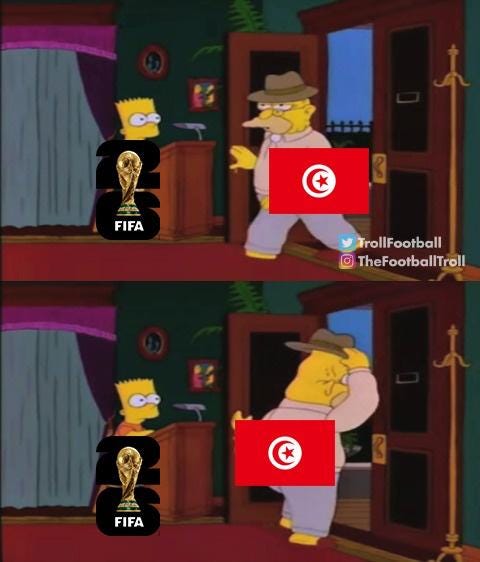
Tunisia's humiliating World Cup campaign has made it a global punchline. But the real crisis runs far deeper than football.

Welcome to Sports Politika, a media venture founded by award-winning investigative journalist Karim Zidan that strives to help you understand how sports and politics shape the world around us. My mission is to offer an independent platform for accessible journalism that raises awareness and empowers understanding.
If you share this vision, please consider supporting my work by joining becoming a paid subscriber or by pre-ordering my new book, THE ULTIMATE STRONGMEN.
Tunisia’s 2026 World Cup campaign was utterly miserable.
The “Carthage Eagles” saw their North American campaign come to a swift end on Thursday after a 3–1 defeat to the Netherlands. The loss left Tunisia bottom of the group with zero points and a goal difference of -10—among the worst performances of any team in World Cup history.
Despite topping their qualifying group by 13 points, Tunisia lost all three of its World Cup group games, including a 1-5 loss to Sweden in the opening match, which led to the sacking of the team’s head coach Sabri Lamouchi. Yet despite bringing former Africa Cup of Nations winner Herve Renard as his replacement, Tunisia lost its second match to Japan 4-0, thus ensuring that it would not advance past the group stage.
The only teams to have performed worse than Tunisia in recent history were Saudi Arabia, which finished with a -12 goal differential following an humiliating 8-0 loss to Germany in 2002, North Korea, which was the lowest ranked team in the 2010 World Cup and finished bottom of its group with a -11 goal differential, and Iraq, which finished its 2026 campaign with zero points and a -11 goal differential.
Over the past decade, Tunisia has succeeded in maintaining the image of footballing stability in Africa. It maintained a near-permanent presence at the AFCON, and had a handful of clubs capable of competing continentally. But recent years have indicated at a deeper rot within Tunisian football. In comparison to fellow North African neighbours like Morocco and Egypt, Tunisia has not enjoyed the same level of state investment in football. Stadiums and training facilities remain outdated; local leagues suffer from a lack of funding and competitiveness, and a limited talent scouting and development.
These vulnerabilities within Tunisian football were evident long before the 2026 World Cup. In January 2026, Tunisia failed to reach the AFCON quarterfinal after losing to a 10-man Mali on penalties. The federation dismissed head coach Sami Trabelsi and brought in Lamouchi. At first, the results seemed promising: a 1-0 win against Haiti and a 0-0 draw with Canada. Then came a 1-0 loss to Austria and a calamitous 5-0 loss to Belgium, which set the stage for a disastrous World Cup run.
Tunisia’s humiliating World Cup campaign has made it a global punchline. But the real crisis runs far deeper than football.
Hours following Tunisia’s final group game against the Netherlands, a local court sentenced Sihem Bensedrine, 75, a prominent human rights defender, to a total of 25 years in prison. Bensedrine was detained in August 2024 on charges relating to her work seeking state accountability for decades of human rights abuses. Her sentencing marked the latest in President Kais Saied and the Tunisian government’s crackdown on civil liberties and dissent in the country.
“The abusive conviction and sentencing of Sihem Bensedrine to 25 years behind bars reflects the cruelty of President Kais Saied’s government, which has sought to strangle human rights and social justice in Tunisia,” said Bassam Khawaja, deputy Middle East and North Africa director at Human Rights Watch. “Bensedrine has for decades been harassed, jailed, and pushed into exile for her human rights work. Her sentence would keep her in prison until she’s 100 years old.”
Tunisia is one of the several Arab countries that sought a democratic transition following revolutions that overturned decades of authoritarian rule, known as the “Arab Spring.” Tunisians were the first to take to the streets in December 2010, eventually ousting President Zine El Abidine Ben Ali, who reigned from 1987-2011. In the immediate aftermath of his removal, Tunisia experienced a period of genuine political freedom, where elections were competitive, political parties were formed, and civil and political rights were significantly expanded.
Despite the improvements in political freedoms, relatively little changed in terms of economic outlooks. Tunisians still endured bureaucratic inefficiency, corruption, inequality and limited employment opportunities, which impacted their faith in the democratic system. This eventually led to the rise of Kais Saied, an independent candidate who rose of populist wave of resentment against the political elites that propelled him to the presidency by 2019. Less than two years later, Saied moved to centralize power by dissolving parliament cracking down on judicial independence.
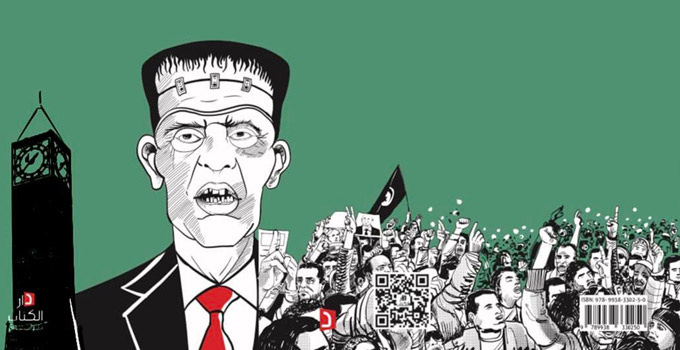
In the five years since dismantling the remnants of the post-2011 democratic order, Saied has overseen Tunisia’s gradual slide into authoritarianism and state repression. In 2023, government officials confiscated all copies of Kamel Riahi’s The Tunisian Frankenstein, whose cover features Saïed depicted as Frankenstein’s monster. Riahi’s book uses the metaphor of Frankenstein’s monster to highlight the dangerous transformation of Tunisia’s political landscape since the 2011 revolution. Banning the book only served to prove Riahi’s point. (Author’s Note: I have one of the last surviving copies of the book and it remains a cherished part of my library)
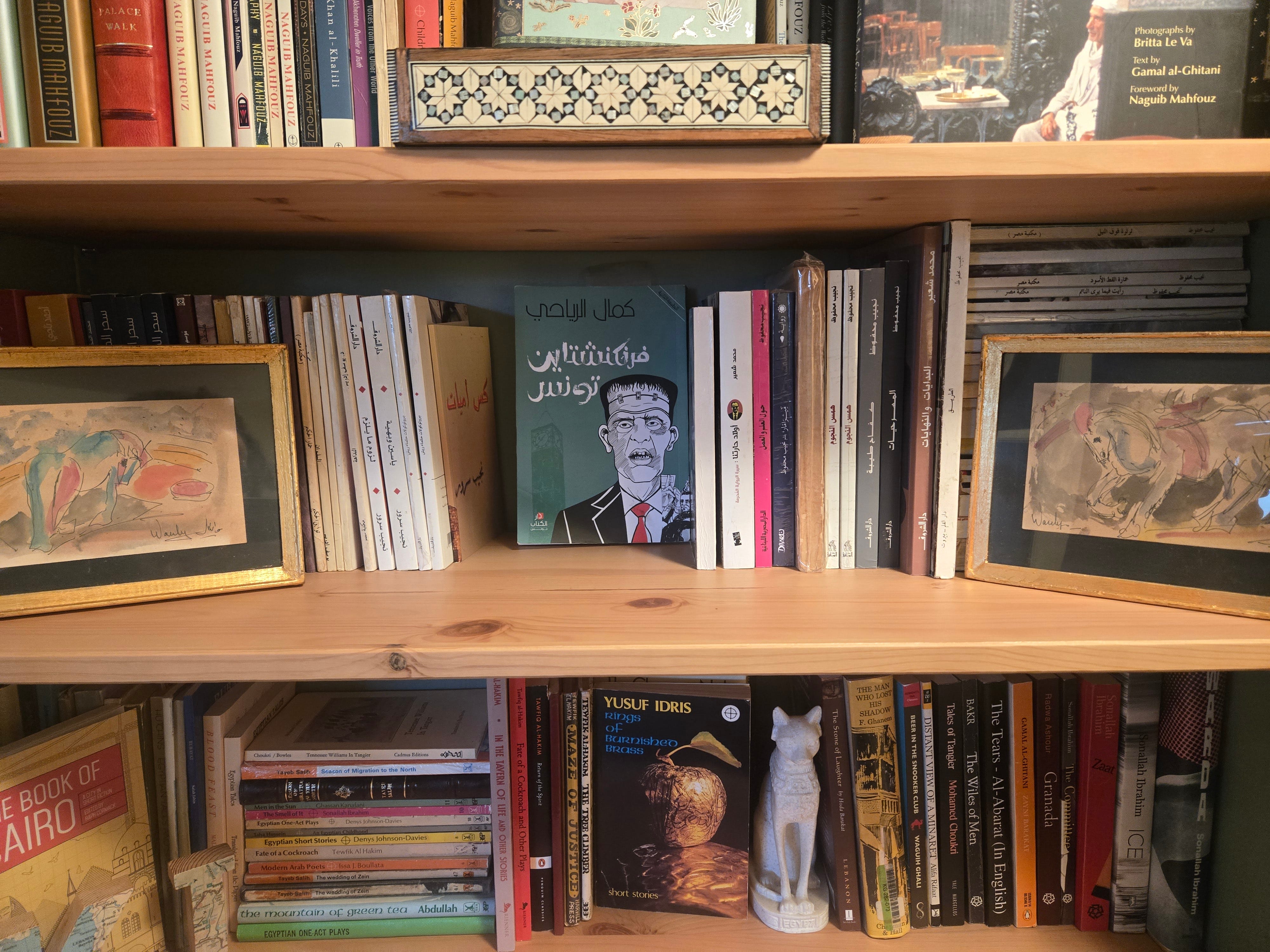
“This incident is unprecedented in Tunisia’s post-2011 history, and it highlights the severe threat to freedom of expression, particularly as the authorities mobilize crowds and supporters to silence opposition and dissent,” Riahi said in an interview at the time. “As a result, I have been subjected to thousands of insults and threats from the president’s supporters, a form of violence that will undoubtedly have a chilling effect on other opinion holders.”
By 2024, Tunisian authorities have systematically “targeted civil society organizations through arbitrary arrests, detentions, financial and criminal investigations, and administrative suspensions,” threatening to “collapse one of the last remaining pillars of democracy in the country,” according to HRW. Tunisian authorities have prosecuted dozens of NGO workers and activists, targeted independent media outlets with financial investigations and lengthy prison sentences, and collective expulsions of migrant asylum seekers.
On Friday, June 26—the day following Tunisia’s World Cup exit—the Committee to Protect Journalists, Amnesty International, and five other press freedom and human rights organizations sent a joint letter to the European Commission President Ursula von der Leyen calling for an immediate change in the EU’s approach toward Tunisia due to a severe human rights decline.
“Civil society in Tunisia is under attack,” read the letter.
Sports Politika is a media platform dedicated to the intersection of sports, power and politics. If you like what you see, upgrade to a paid subscription (or gift a subscription if you already have your own). We would appreciate if you could also like the post and let us know what you think in the comment section below.
Never heard of this Kais asshole before. Though Tunis was doing aight. Thanks Zidan for keeping me sharp ✌🏿