

Qatar was watching us all along
“We had profiles for journalists: who was friendly, who was supportive, who was easygoing, who was critical and who was problematic. And we had a way to handle each and every one of them.”

Welcome to Sports Politika, a media venture founded by investigative journalist and researcher Karim Zidan that strives to help you understand how sports and politics shape the world around us. My mission is to offer an independent platform for accessible journalism that raises awareness and empowers understanding.
If you share this vision, please consider supporting my work by joining becoming a paid subscriber.
While much of the football world’s attention is fixed on the 2026 FIFA World Cup—replete with awkward draw ceremonies and a peace prize handed to U.S. President Donald Trump like a gilded pacifier—few outside the Middle East have noticed that the Arab Cup is unfolding concurrently, with Morocco and Jordan set to contest Thursday’s final.
The quadrennial invitational tournament is taking place in Qatar, marking the third time the Gulf state hosts the competition following the 1998 and 2021 editions. It will also host the 2029 and 2033 editions of the event, emphasizing Qatar’s continued presence in the global football scene.
Sheikh Hamad bin Khalifa bin Ahmed Al Thani, Minister of Sports and Youth told Qatari state media that the Arab Cup carries a message calling for “Arab unity and represents a window for introducing our authentic culture and ancient heritage.” And yet, as I watched the tournament unfold, I couldn’t help but think of Abdullah Ibhais, the Jordanian whistleblower jailed for refusing to spin migrant abuses ahead of FIFA’s 2022 World Cup, and his recent revelations about state surveillance of journalists ahead of the 2022 World Cup.
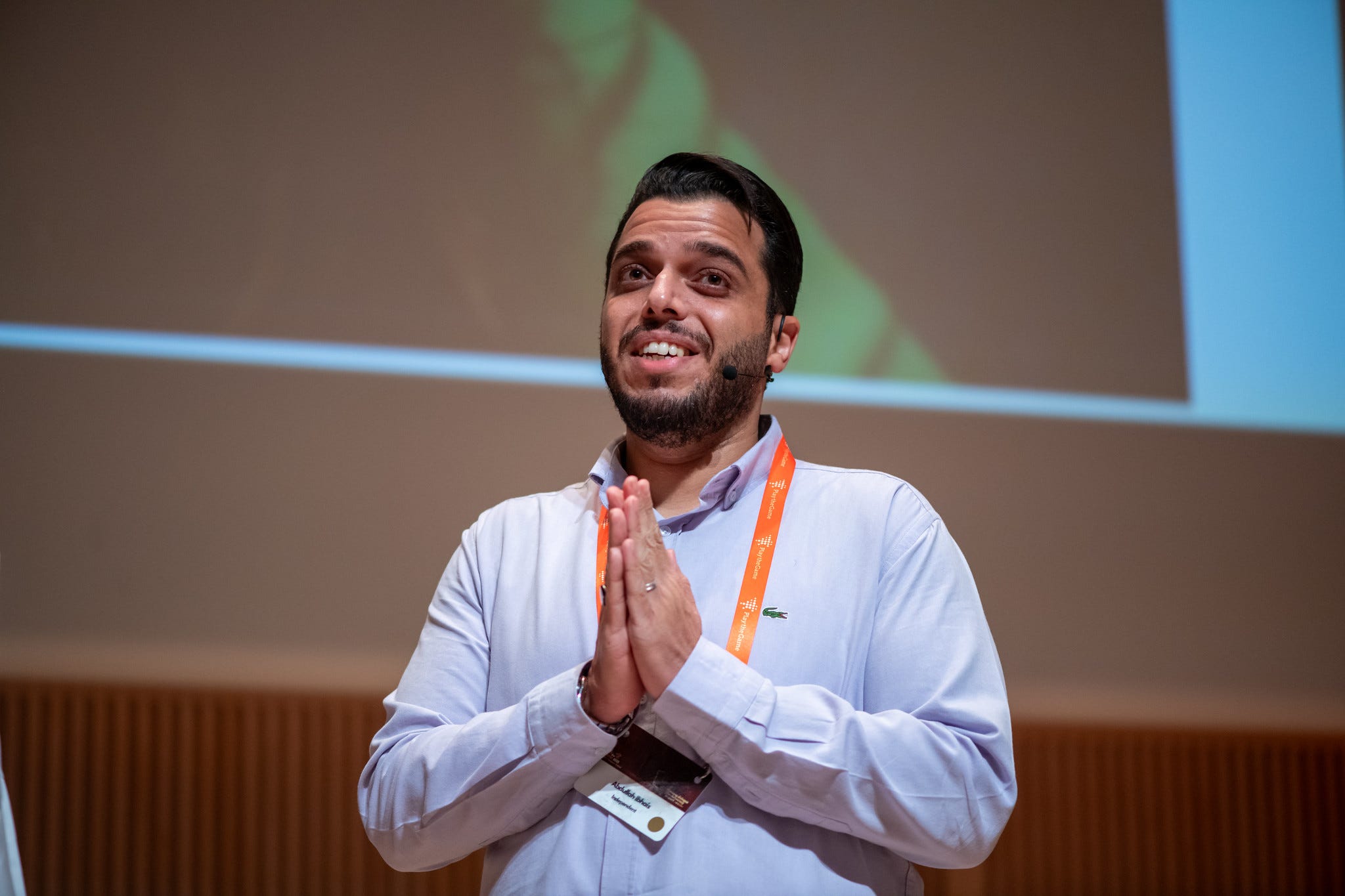
During the Play the Game 2025 conference in Tampere, Finland last October, Ibhais took the stage and exposed Qatar’s strategy of media manipulation and surveillance of journalists ahead of the quadrennial tournament. “For them, the World Cup - before anything else - was a reputational campaign that they spent more than 300 billion dollars to achieve,” Ibhais said.
Ibhais is a former media manager for the Qatar’s Supreme Committee for Delivery and Legacy (the body responsible for organising the 2022 FIFA World Cup), and he was arrested in November 2019 shortly after he criticised the Qatari authorities’ handling of a workers’ protest, highlighting mistreatment of migrant labourers.
He was accused of bribery, misuse of state funds, and leaking confidential information related to a tender process. Ibhais denied all charges, but nevertheless, he was found guilty of them in April 2021 at a Doha criminal court, including a charge of causing harm to the Supreme Committee. He was initially sentenced to five years in prison, which was later reduced to three years, and he was released in March 2025.
And yet, he insists he is not a hero, noting that he, too, believed in the mission to deliver the Arab world’s first World Cup.
In his role as the committee’s media manager, Ibhais was responsible for implementing Qatar’s media strategy for the World Cup, which he laid out with exceptional clarity to the riveted audience.
“The way they dealt with criticism from day one was through these three main streams: deflect, discredit, and deny,” he said.
“We had a way to handle each and everyone of them”
Ibhais described how the organization employed manipulative tactics to manage sports journalists, granting select reporters privileged access to uncontroversial materials, press releases, and exclusive content.
This not only made their work easier but also fostered a sense of dependence on that access, effectively discouraging those journalists from publishing critical coverage.
At this moment, Ibhais delivered a stunning revelation: Qatar was also surveilling media organizations and journalists.
“So, we had a media profiling,” he explained.
“We had profiles for journalists: who was friendly, who was supportive, who was easygoing, who was critical and who was problematic. And we had a way to handle each and every one of them.”
“We would go and do research on their social media, on the platform, on their visits, on their views on Qatar and the Arab world, and we would have a plan to deal with each and every one accordingly. And whatever results we had, we would share with all government agencies and Qatari interests in Qatar and around the world to ensure that we have unified messaging.”
“Journalists who were friendly were always invited and included and given exclusives. Journalists who were problematic were always left in the dark and rarely given access to Qatar.”
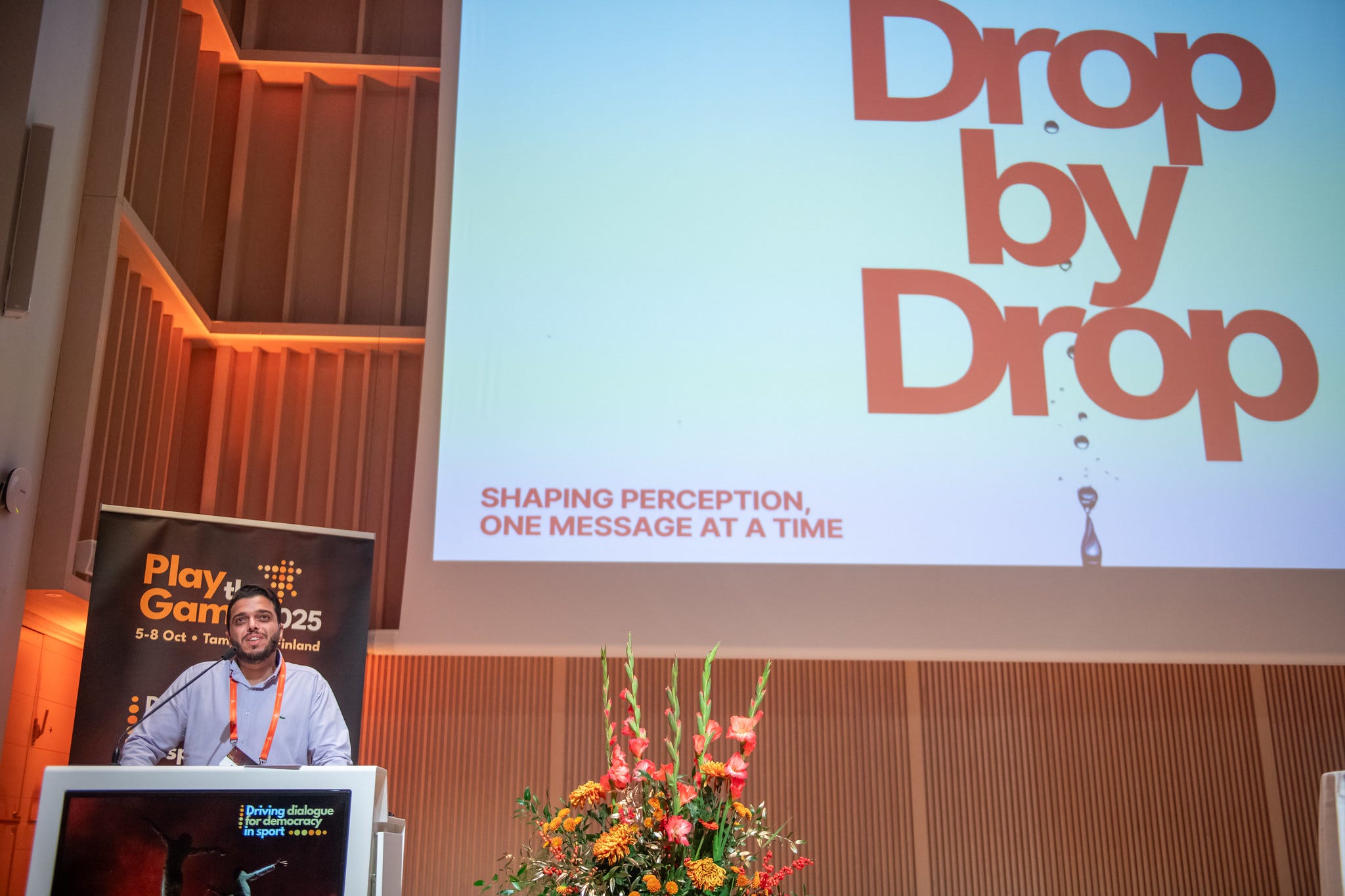
“And finally, if all of that didn’t work, we used to bypass the media. So we would go and give briefings in the parliaments, in the congress, for football federations, for diplomats, for ambassadors. And this we would do directly, so they would not pick up any negative messaging around the World Cup,” Ibhais explained.
Ibhais, who has since been reunited with his family in Jordan, ended his talk by explaining that these strategies will likely continue to be weaponised in the tournaments to come.
“We need to promote media literacy and fact-checking among sports journalists themselves, support independent investigation and diverse reporting, and build resilient networks that can withstand narrative flooding,” he said.
He encouraged journalists to continue critical coverage of football tournaments as that had actually been effective in Qatar.
“Do not despair and do not stop because this is the only thing that kept them on their toes. They were always really worried about the next negative piece that would come, even though all these efforts were taking place at the same time,” Ibhais said.
Sports Politika is a media platform focusing on intersection of sports, power and politics. Support independent journalism by upgrading to a paid subscription ( or gift a subscription if you already have your own). We would appreciate if you could also like the post and let us know what you think in the comment section below.