

Messi and the politics of an apolitical icon
Messi rarely speaks about politics—but that hasn't stopped politicians and governments from putting his image to political use.

Welcome to Sports Politika, a media venture founded by award-winning investigative journalist Karim Zidan that strives to help you understand how sports and politics shape the world around us. My mission is to offer an independent platform for accessible journalism that raises awareness and empowers understanding.
If you share this vision, please consider supporting my work by joining becoming a paid subscriber or by pre-ordering my new book, THE ULTIMATE STRONGMEN.
Shortly after Lionel Messi scored a hat trick to complete Argentina’s 3-0 victory against Algeria at the start of the 2026 World Cup, an Algerian sports analyst blamed the “Jewish lobby” for protecting the world’s greatest football player.
“This lobby controls the world, they run it however they want as if they were the mafia,” said analyst Mustafa Mazzouzi, who blamed the lobby for the referee’s controversial decision not to award Messi a red card for a blatant studs-up challenge on an Algerian opponent’s calf. “[FIFA President Gianni] Infantino does not wish us well” He added, “We have political stances regarding Western Sahara and the Palestinian issue so they don’t wish us to do well.”
As Argentina progressed through the tournament, the conspiracy theories followed. There was the controversial disallowed goal for Egypt in the Round of 16 that resulted in a narrow 3-2 victory for Argentina, and a VAR decision that led to a red card in the quarterfinal against Switzerland. Then there is the fact that the Argentina football federation (AFA) and its president are being investigated by the FBI for possible money laundering. So with each win, accusations of a Zionist conspiracy gathered more support. Some claimed that Messi himself was a Zionist, while others pointed to the 39-year-old’s friendly relationship with Israel.
In July 2013, Messi visited Israel with Barcelona FC, the Spanish club where he spent the vast majority of his professional career. The team visited the Western Wall, one of the holiest sites in Judaism, and posed for photos with state officials like prime minister Benjamin Netanyahu.
In 2018, Argentina canceled a friendly match against Israel after protests from the Boycott, Divestment and Sanctions (BDS) movement. Jibril Rajoub, the president of the Palestinian Football Association, also protested by calling on supporters to burn Messi jerseys if Argentina went ahead with the match. He was subsequently suspended for a year by FIFA.
Messi has since played several matches in Israel: a 2019 friendly with the Argentine squad and twice with Paris Saint-Germain in 2022. Outside of a three-year brand ambassador contract with Israeli AI firm OrCam, his personal interactions with Israel have been minimal. Nevertheless, critics persisted. The fact that Messi had never spoken out in favour of Israel, or ever announced himself as a Zionist, didn’t seem to matter. What mattered was the perception that Messi was allowing Israel, a state that had killed well over 2,000 Palestinian civilians in the three Gaza conflicts (2008-09, 2012, 2014) during the time he began visiting the country, to capitalize on his image—and the soft power that comes with it—for political gain.
In a piece for Newlines Magazine, Argentine professor Pablo Alabarces argued that, unlike some other superstar athletes, Messi “holds no political opinions.” It is a fair assessment, especially when limited to verbal and written statements. However, this does not mean that Messi doesn’t his personal brand to be co-opted by those with political interests.
In 2023, I co-authored a story with the excellent Tariq Panja for The New York Times, in which we revealed the details of Lionel’s Messi’s then-ongoing partnership with Saudi Arabia’s tourism authority. His contract included a clause stating that Messi could not say anything that may “tarnish” Saudi Arabia, a country with an atrocious human rights record.
Messi’s commercial deal with Saudi’s Tourism Authority was worth approximately $25m over three years. He signed his tourism deal in January 2021 but the partnership was not officially announced until May 2022, when Saudi officials unveiled him as a tourism ambassador during a visit to Jeddah. His obligations for the duration of the contract included tourism campaigns, social media posts, charity appearances, and all-expenses-paid vacations. In one of his contracted visits, Messi was accompanied by his wife and children, who were photographed participating in a variety of family activities: petting horses, playing traditional board games, and sitting with a craft artist while holding a woven hat.
Given that Messi is one of the most popular athletes on the planet, his continued willingness to promote Saudi Arabia is a significant boon, as the kingdom has faced widespread criticism for its human rights record. The kingdom has come under scrutiny for the murder of journalist Jamal Khashoggi, as well as its suppression of freedom of expression, with authorities cracking down on dissent, imprisoning activists and intellectuals advocating for reforms.
Here’s the thing: Messi didn’t need the money. In 2022—the same year he began making visits to Saudi—he made $122 million through salary and sponsorship deals, making him the second highest paid athlete in the world at the time. This was an intentional decision to tie his personal brand to an authoritarian regime with big ambitions.
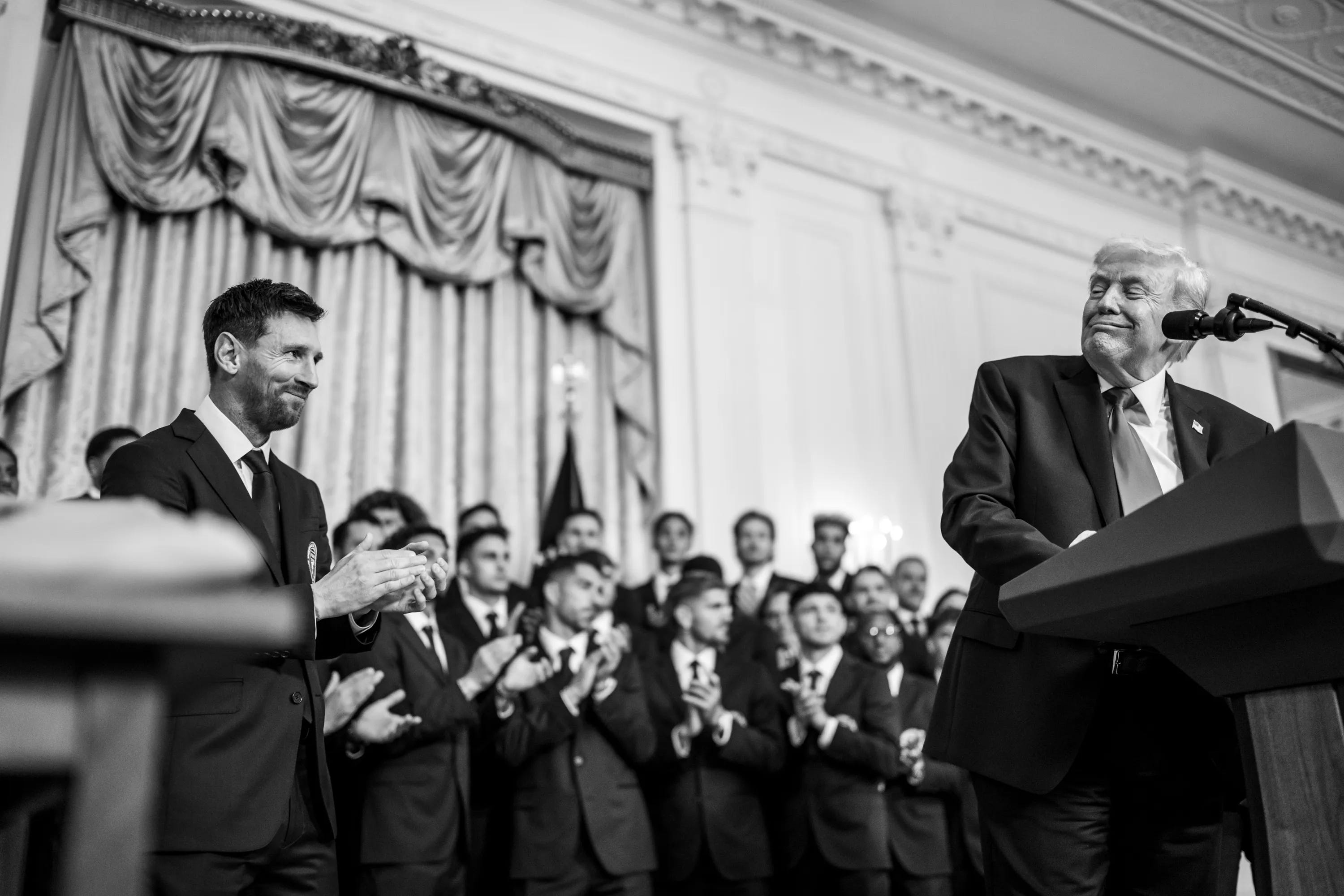
In 2023, Messi joined Inter Miami as the highest-profile signing in Major League Soccer history. Less than two years later, he captained his side to a victory against the Vancouver Whitecaps to claim the MLS title. A few months later, Messi and his team were honoured at the White House in a ceremony hosted by U.S. President Donald Trump.
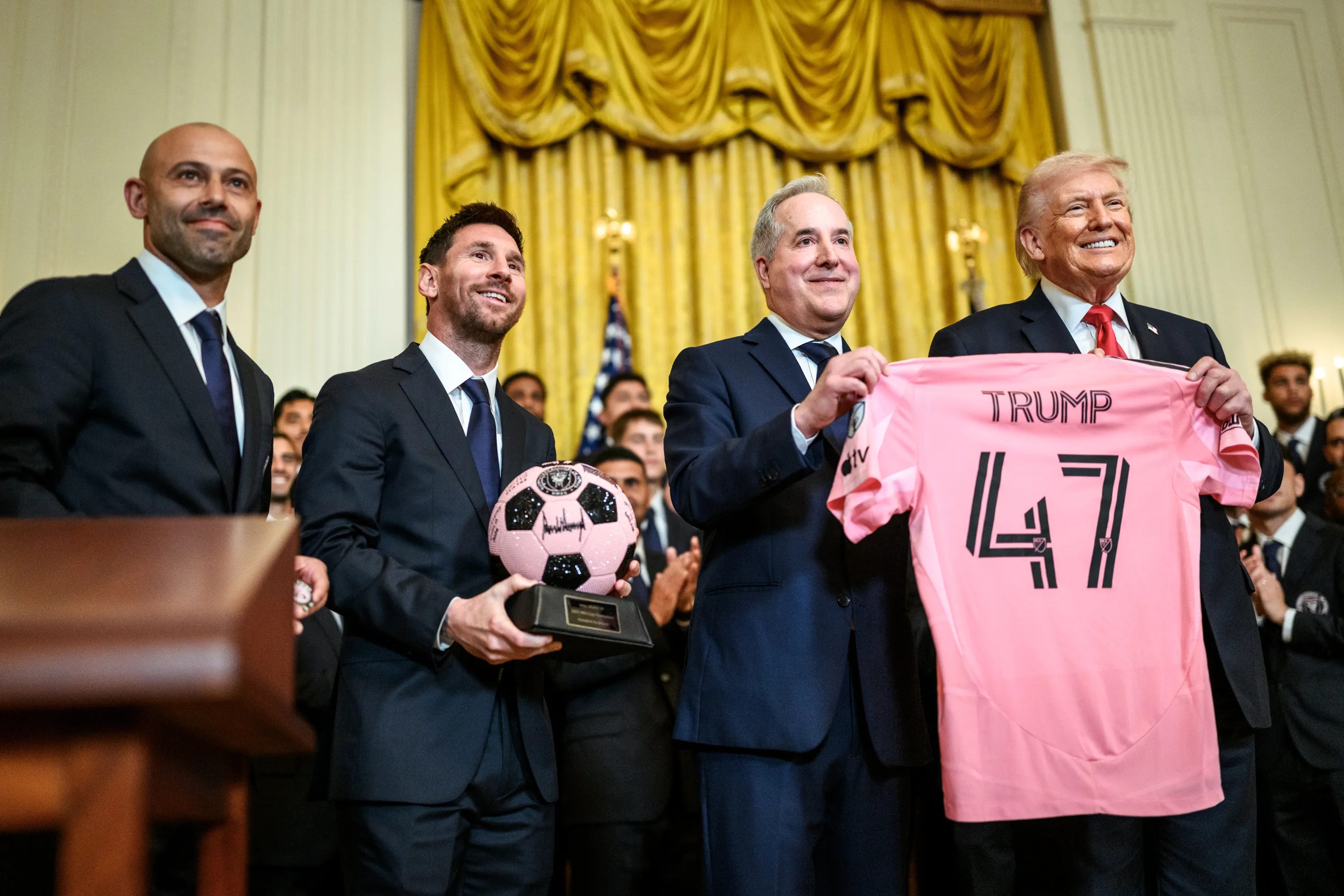
Messi once again did not speak but that did not stop Trump from boast about his country’s ongoing war against Iran. “The United States military, together with the wonderful Israeli partners, continues to totally demolish the enemy, far ahead of schedule and at levels that people have never seen before,” Trump said, as Messi and his team applauded.
Unlike Argentina’s preceding superstar icon Diego Maradona, who championed left wing politics in Latin America, Messi has chosen the path of political neutrality. This doesn’t necessarily mean that Messi, nor his supporters, lean more conservative. In fact, according to a survey of more than 10,000 people conducted by the Nanyang Technological University in Singapore found that people who identified as more liberal tended to favour Messi, while those who viewed themself as conservatives identified with his arch rival Cristiano Ronaldo. Nevertheless, Messi continues to avoid saying anything political, occasionally favouring vague statements about inequality and wanting what is best for his country.
This may be for the best, as Argentina’s far-right president Javier Milei has also sought to boost his own popularity by aligning himself with Messi.
Seizing on the criticism from the media and political opponents that Messi had helped legitimize Trump, Milei declared: “If you mess with Messi, you mess with us all.”
Sports Politika is a media platform dedicated to the intersection of sports, power and politics. If you like what you see, upgrade to a paid subscription (or gift a subscription if you already have your own). We would appreciate if you could also like the post and let us know what you think in the comment section below.